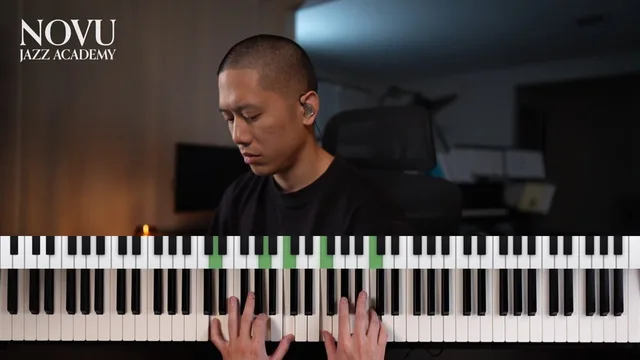
Level 1: Functional Spread Voicings
This is how you start. You follow a set of rules and guidelines to understand how the technique works.
You’ve watched dozens of YouTube tutorials, read popular jazz theory books, and even tried a few courses, but you still can’t play the real, authentic jazz you want to play.
You practice the drills and exercises, but the moment you sit down at the piano, it sounds nothing like the jazz you hear all over the internet.
The effort you put in doesn’t match the way you play, and jazz starts to feel like a complex puzzle you just can’t crack.
You keep learning more theory, concepts and techniques, but you end up with more and more pieces and no idea how they fit together.
You hear great jazz pianists, with chords that sound rich and connected and improvisation that sounds like musical thoughts instead of random notes, and it just makes you wonder…
You see, the problem isn’t necessarily that you haven’t studied enough jazz theory, or that you haven’t practiced enough exercises.
It’s that there’s a crucial difference between learning ABOUT jazz…
…and learning how to actually PLAY it.
So, how do you do that?
That’s what my jazz teacher told me in our first few lessons. It changed how I approached learning jazz, and it changed the way I teach my students now.
Pretty simple, right?
But I didn’t always know that.
When I first started learning jazz, I spent about 2 years going through the exact same things you’re going through now.

I’m Charlie Tran, a jazz pianist and teacher. I’ve helped over 100 adult pianists learn jazz through my methods, and over 200 more through my Academy.
And here’s what’s interesting about this approach:
the deeper you understand one single technique, the more you understand jazz as a whole.
So every new concept builds on what you already know, which makes the next one easier to learn.
It’s like a snowball effect.
But it all starts with choosing the right concept to focus on first.
If you mostly want to play jazz piano for yourself, I’d start with the technique that’s actually meant for playing solo…
It turns one piano into a whole ensemble, so you play the melody, the bass, and rich harmonies in between, all at once. It’s quite easy to get into, and that’s why it was one of the first techniques my teacher showed me.
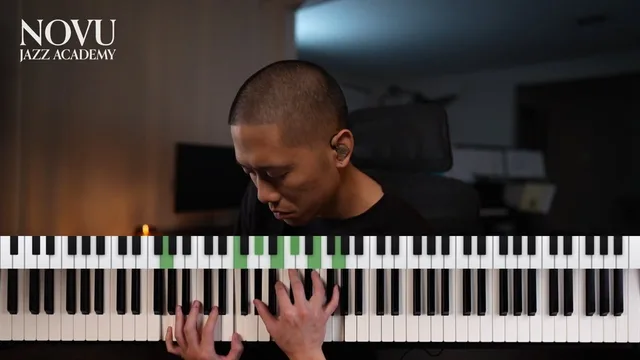
There’s just one problem…
The voicing you play depends on the:
Combine it all and you end up with thousands of different voicings. A lifetime wouldn’t be enough to learn them one by one.
So what you actually need to do is simply understand how those voicings work and how to choose which notes to play.
And to help my private students do this without feeling overwhelmed, I created my…
This system makes it simple and intuitive to learn these voicings, understand how they work, and use them to play jazz.
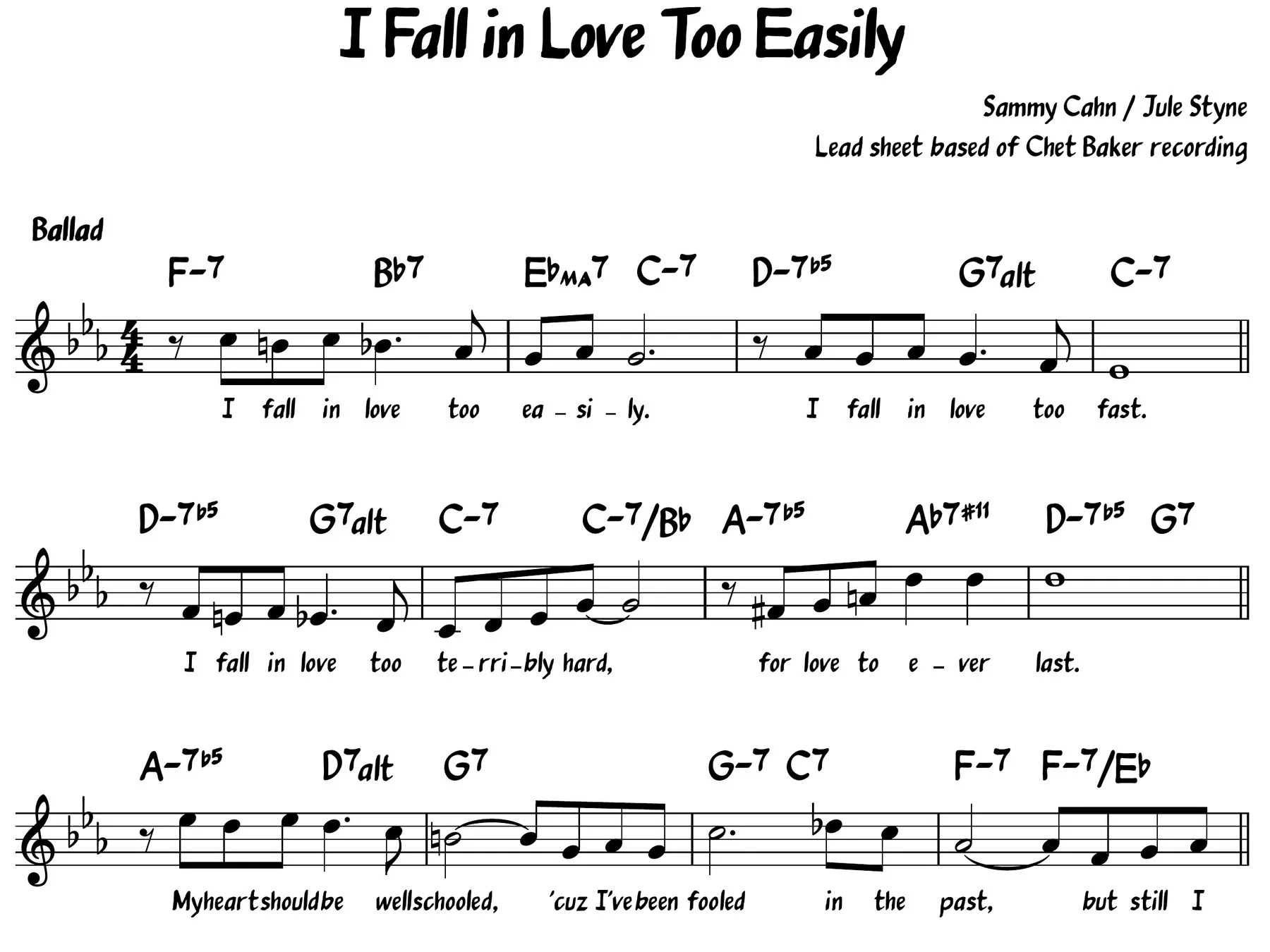
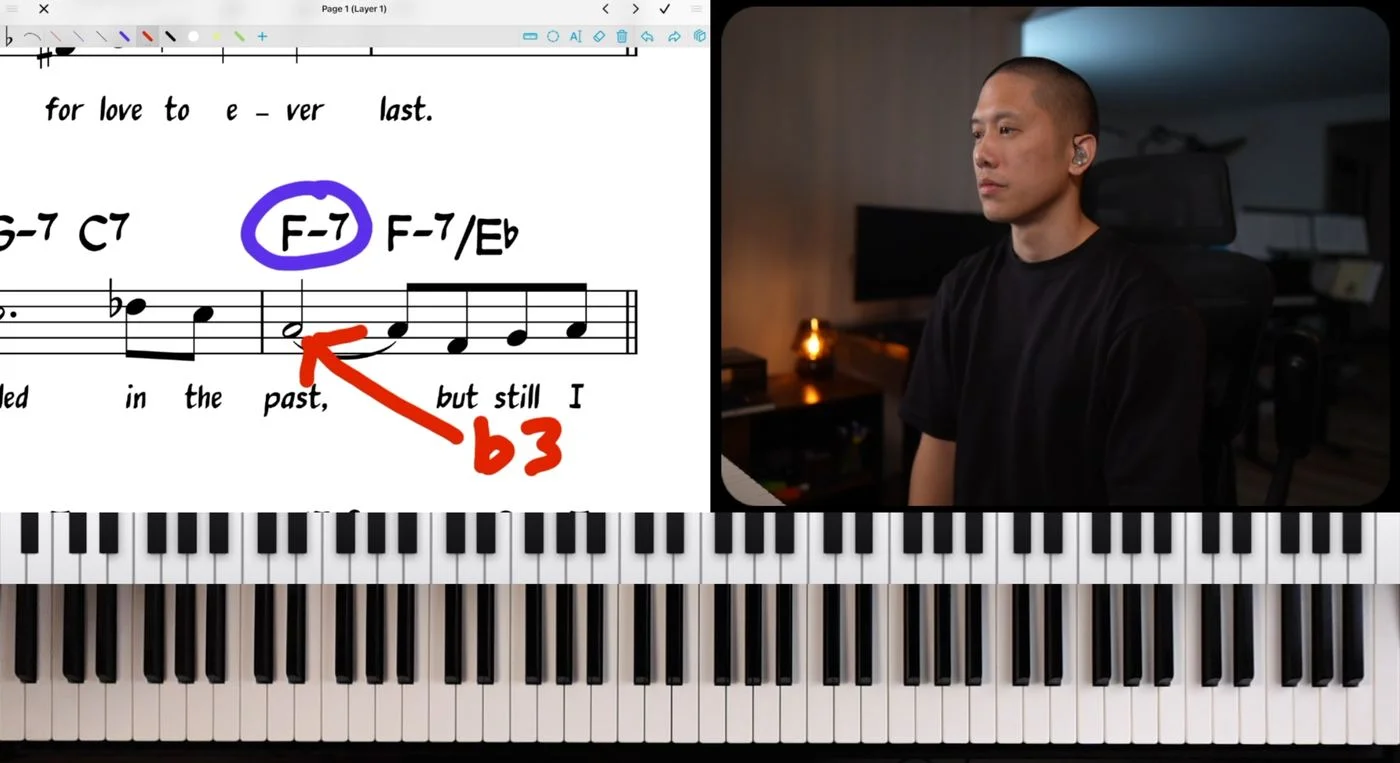
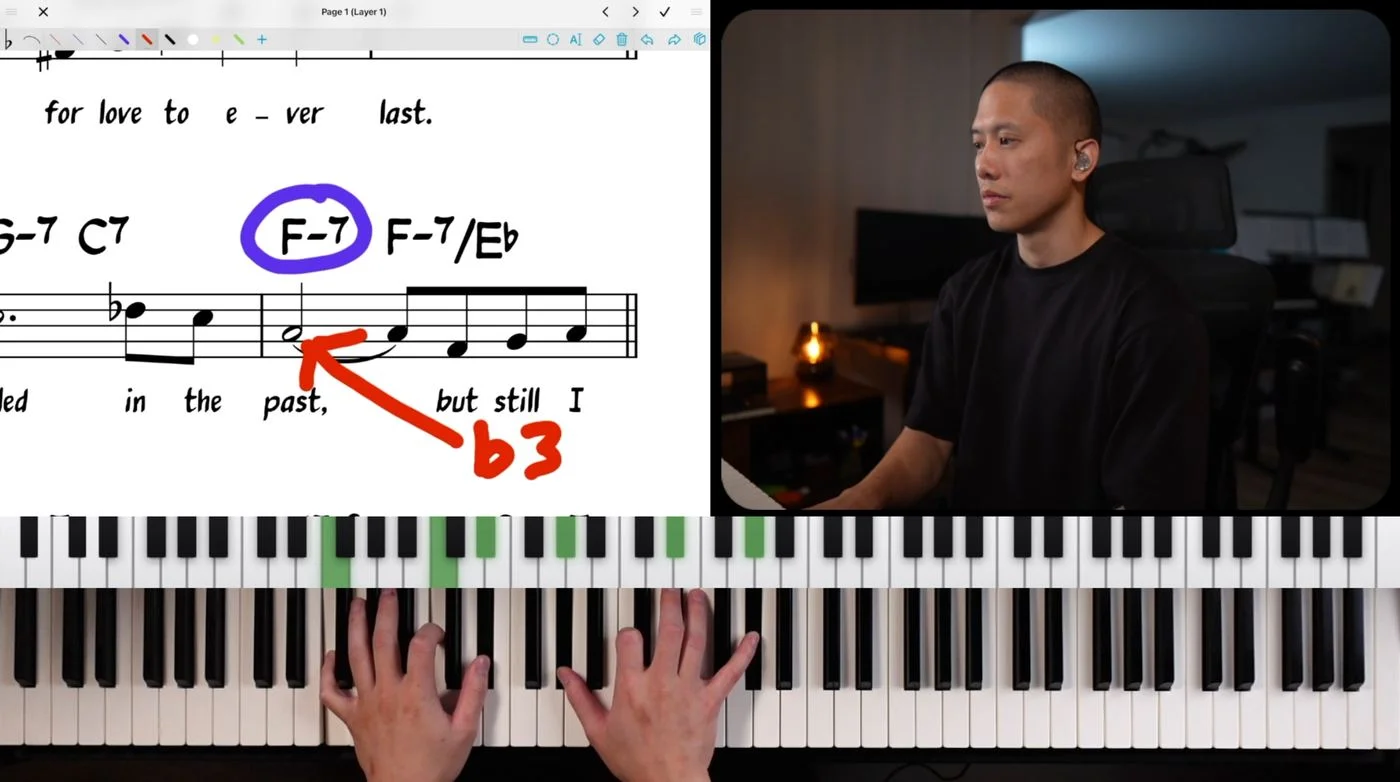
I’ll show you the whole process step-by-step on real jazz standards, and we’ll also look at some of the unique exceptions.
And because Spread voicings can be as simple as a few chord tones, or as advanced as all sorts of extensions and alterations, I divided the system into…
This is how you start. You follow a set of rules and guidelines to understand how the technique works.
That’s where you discover more “Jazz Authentic” voicings that use all kinds of colorful extensions, and more ways to arrange the notes within each chord.
You’ll learn those rich, sophisticated, harmonically advanced sounds that make you stop and think, “That sounds like jazz.” You learn advanced alterations and different ways to voice each chord, and this is where things really become your own.
I designed this system to give you a simple starting point, and to gradually take you from following guidelines to:
And every time you move up to the next level, you’ll literally hear the difference in your playing because, across all 3 levels, you’re going to play the same…
I created this system for my private students, but not everyone has time to learn jazz with a teacher.
So I made it accessible to everyone who wants to improve their jazz piano playing, at their own pace, inside…

One ever-growing library with everything you need to learn jazz, so you never wonder what to learn next, how to practice, or where to find the right information.
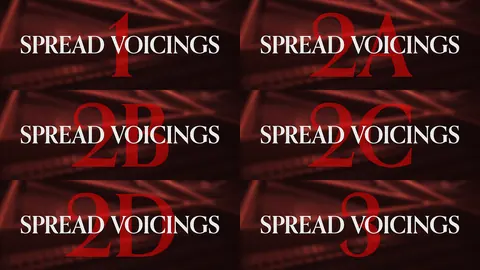
My full 3 Level Spread Voicing System, in 6 full courses: one for Functional, four for Authentic, and one for Pro Authentic Spread Voicings.
The fundamentals of jazz and music: the scales, the essential jazz chord types, how to practice them, and how to build your practice routine.
More specific jazz fundamentals: essential tones, shell voicings, the most common jazz chord progression, rhythms and comping patterns. Then I walk you through 11 tunes and show you how to apply it all to real jazz music.
Play rich, full-sounding jazz chords with just one hand, so you can comp through tunes while playing the melody with the other.
An Arpeggio Mini-Course that teaches you great ways to fill the gaps in your music with colorful runs.
Your go-to resource for concepts that apply to multiple techniques. Whenever something deserves a closer look, I point you to the relevant lesson inside this course, so you see how it all fits together.
Our private community. If you have a question, or something doesn’t quite make sense, just drop it in. I’m always happy to help.
You've heard jazz pianists ripping out their solos, but you've got no idea what's going on, except that you wanna play like that yourself.
Maybe you've tried to learn soloing before, but got overwhelmed by all the concepts, or your lines sounded more like a bunch of random notes than a complete musical story.
This is where you start.
We're not jumping into advanced stuff right away, that's for the second level of this series. For now, we build a strong foundation for what comes next. And that's why I divided this course into two parts.
You'll learn how to play them with intention, so you control which notes you choose to play, where you start and finish your phrases, and what rhythms you're actually playing.
This is when we start looking at soloing from a bigger perspective and turn those individual phrases into full musical sentences.
That's what professionals do to make their solos sound like speech or a musical story.
There are dozens of different concepts to learn. So every time I show you something new, you put it into practice right away, so you're not just learning about jazz, but actually learning how to play it.
With each lesson we dive deeper into each concept, and you'll see how those ideas connect and overlap. At the end of the course, you'll test your ear and start recognizing different concepts within someone else's solo.
That's when you stop wondering what's going on and start recognizing what the player is actually doing.
One of the most effective habits for learning how to improvise. It makes the piano feel less like an instrument you're playing and more like a part of your body that you use to express your musical ideas.
A tool that makes learning jazz, or actually anything in life, much simpler. It's one of the main aspects of my teaching approach, and my students use it every time they feel overwhelmed by a concept or technique.
There are dozens of courses I still want to add, so you can bring everything together and play jazz with more freedom every time you sit down at the piano.
And every new course I add is yours too. It simply appears in your library.
The Academy isn’t for everyone, and I’d rather you find that out now than after you’ve joined. So let me be straight with you.
As someone who is very logical, his spread hand voicing systems and emphasis on rhythmic transformed my ability to play jazz piano.
Charlie gives you what you need, to play at the level you want, no more and no less.
I get to learn everything from the basics to the most advanced in such a short time using the academy
Charlie is knowledgeable, patient, and fun. … He gives valuable insight on ways you can improve your jazz piano playing no matter what level you're at.
… the academy website is in my opinion one of the best platforms to learn every aspect of jazz … It’s a massive library full of very specific lessons that can be self-tailored for anyone, no matter their skill level.
If you’re ready to stop jumping from one concept to another and start playing real jazz, get started below…
Use it at checkout. The offer ends in:
No subscription. Every future course included.
Join Novu Jazz AcademyAlready bought my mini-course samples or the arpeggio course?
Email charlie@novujazzacademy.com and I’ll give you a discount code for what you’ve already paid.
“I still come back to the lesson videos and pdfs when I’m working on a new song to review my spread voicings and expand my chordal vocabulary.”
If you can already play a jazz standard or two, with the melody in your right hand and 7th chords in your left, you’re ready. And if you're just starting out in jazz, you can begin with Jazz Piano Prep 1 and 2.
It’s a one-time payment for lifetime access to the Academy. You get access to all the courses inside, as well as any new courses I add in the future.
Drop it in The Café, our private community. I’m always happy to help.
If you’ve bought my mini-course samples or the arpeggio course, email charlie@novujazzacademy.com and I’ll give you a discount code for what you’ve already paid.
If you’re tired of jumping from one concept to another without knowing what to focus on, this is exactly why I created Novu Jazz Academy: a place to learn the essential jazz concepts and techniques, understand how they connect, and build the skills to actually play real jazz.